
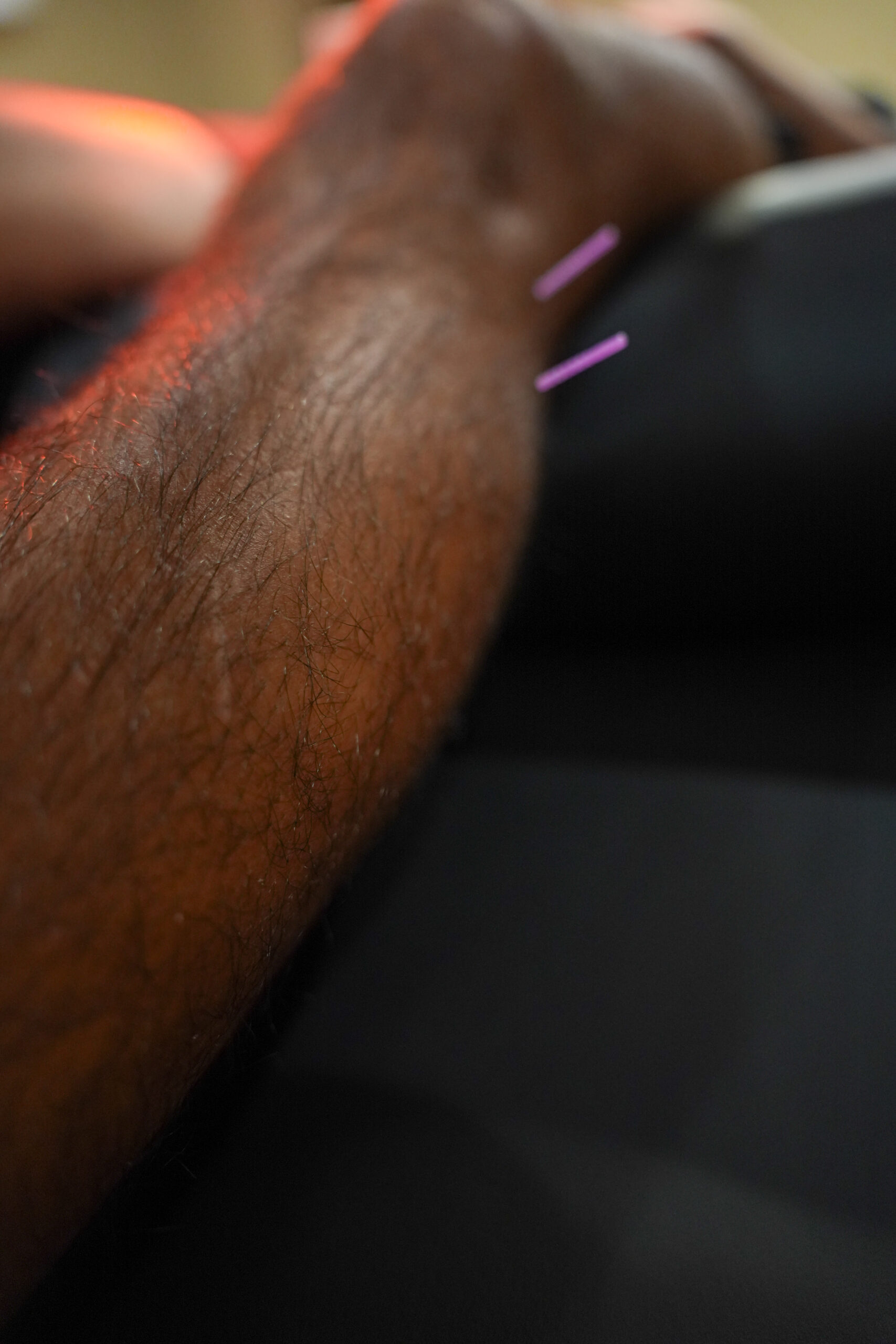
Walk into a chiropractor’s office or a physical therapy clinic in Kissimmee, Orlando, or anywhere else in Florida and you’ll likely see the same scene: a patient lying face-down with thin needles inserted into a tight muscle. From the outside, it looks identical to acupuncture. The needles look the same. The technique looks similar. So patients reasonably ask: what’s actually different?
The answer matters more than most people realize. Acupuncture and dry needling are not interchangeable. They are performed by practitioners with vastly different training, address fundamentally different aspects of the body, and produce different outcomes — especially for patients dealing with chronic conditions. If you’ve been recommended dry needling by your physical therapist, or you’re trying to choose between the two, here’s what you should know.
The Training Gap Is the Most Important Difference
This is the part most patients are never told.
A licensed acupuncturist in Florida holds a state-issued Acupuncture Physician (AP) license, which requires a master’s-level degree (typically 3 to 4 years of full-time graduate study) including roughly 1,000 to 1,500 hours of supervised clinical training. Many acupuncturists go further and complete a Doctorate of Acupuncture (DAc) degree, which adds advanced clinical, diagnostic, and integrative training.
By contrast, dry needling is typically performed by physical therapists or chiropractors who completed a weekend or 2-3 day continuing education course — often somewhere between 24 and 100 total training hours. Some states require more, but Florida currently has limited regulation around dry needling certification, and the training requirements vary widely by program.
To put it in context: an acupuncturist’s clinical training in needle technique alone exceeds the entire dry needling certification program by roughly 10 to 20 times.
What Each One Actually Does
The techniques look similar from the outside, but they’re working with very different theoretical frameworks and clinical goals.
Dry Needling
Dry needling is narrowly focused on muscle trigger points. The practitioner inserts a needle directly into a tight band of muscle (a “trigger point” or “knot”) to provoke a local twitch response, which can release the muscle spasm and reduce localized pain. The treatment addresses one muscle at a time, in one session, for one symptom.
It can be effective for acute, localized muscle pain — a tight upper trap, a knotted calf after exercise. But its scope is intentionally limited: it doesn’t address why the muscle keeps tightening, what other body systems may be contributing, or any condition outside of musculoskeletal trigger points.
Acupuncture
Acupuncture works at a whole-system level. The practitioner uses traditional diagnostic methods (pulse and tongue diagnosis, detailed history-taking, palpation) to identify patterns in the body — energetic, neurological, hormonal, and structural — that are creating the patient’s symptoms. Treatment involves needles placed at specific points along the body’s meridian system, often far from the area of pain, to restore the underlying balance.
For example: a patient with chronic shoulder pain might receive needles at points on the lower leg or wrist, because those points are along meridians that affect shoulder function. A trained acupuncturist sees the body as one interconnected system, not a collection of isolated muscles.
Acupuncture treats not just musculoskeletal pain but also headaches and migraines, digestive issues, sleep disorders, fertility concerns, hormonal imbalances, anxiety, depression, and many other conditions that dry needling cannot address.
Why the Diagnostic Difference Matters
One of the most overlooked aspects of acupuncture is the diagnostic skill set. Classical Chinese medicine includes pulse and tongue diagnosis — methods of reading the body’s internal patterns through subtle physical signs that point to specific imbalances. These skills require years of mentored study under experienced practitioners to develop properly.
At AcuMedGroup, Dr. Cecilia Rusnak completed her advanced training in pulse and tongue diagnosis under Dr. Zhang at Kunmin Yuan An Hospital in China, alongside her clinical internship in internal medicine at Yunnan University of Traditional Chinese Medicine under Dr. Shui. This is the kind of training that takes years to acquire and isn’t part of any dry needling certification program.
Why does that matter? Because chronic conditions almost never have a single, isolated cause. A patient with chronic neck pain often has stress patterns, sleep disruption, and digestive issues all driving the same underlying imbalance. A skilled acupuncturist identifies those connections and treats them. A dry needling practitioner addresses the neck muscle and stops there.
When to Choose Which
Dry needling can work for acute, localized muscle pain — particularly when integrated into a physical therapy program for a specific injury. If your physical therapist offers it as part of a focused rehabilitation protocol, it may add value.
Acupuncture is the better choice for:
- Chronic conditions that haven’t responded to other treatments
- Pain conditions with stress, sleep, or hormonal components
- Conditions outside the musculoskeletal system (digestive, reproductive, mental health, sleep)
- Patients who want a practitioner who’ll address the underlying cause, not just the symptom
- Anyone who has tried dry needling without lasting results
The Practitioner Behind the Practice
AcuMedGroup Wellness Center is led by Dr. Cecilia Rusnak, who holds a Doctor of Acupuncture, an MS in Oriental Medicine, and a PhD in Oncology Pain Management — alongside her clinical training in China. This depth of training is the foundation classical acupuncture requires, and it’s why patients in the Kissimmee, Orlando, and Lake Nona area come to AcuMedGroup for chronic conditions that other approaches haven’t resolved.
To learn whether acupuncture is right for your situation, call AcuMedGroup at (407) 624-5258.
Frequently Asked Questions About Acupuncture vs Dry Needling in Kissimmee, FL
Is dry needling just a different name for acupuncture?
No. Although the needles look similar, dry needling and acupuncture are different practices performed by different practitioners with very different training. Acupuncture requires a state license, a master’s or doctoral degree, and 1,000+ hours of supervised clinical training. Dry needling typically requires a weekend or short continuing education course completed by a physical therapist or chiropractor.
Can my physical therapist do acupuncture?
In Florida, only licensed Acupuncture Physicians can legally perform acupuncture. Physical therapists who insert needles are performing dry needling, which is a different, more limited practice with different training and a narrower clinical scope. If your PT recommends needling work and you have a chronic condition, you may want to consider whether an acupuncturist would be a better fit.
Which is better for back pain?
For acute back muscle spasm or a tight muscle from a recent injury, dry needling integrated into a physical therapy plan may help. For chronic back pain (lasting longer than 3 months), pain that radiates, pain with sleep or stress components, or pain that hasn’t responded to physical therapy alone, acupuncture is generally the better choice because it addresses the underlying patterns rather than just the local muscle.
Is acupuncture covered by insurance when dry needling isn’t?
Insurance coverage varies by carrier and plan. Some Florida insurance plans cover acupuncture for chronic pain, while others don’t cover either. The VA covers acupuncture for eligible veterans through Community Care, and AcuMedGroup is an authorized provider. To confirm coverage for your specific plan, call AcuMedGroup at (407) 624-5258 — our team can help you understand your options.