
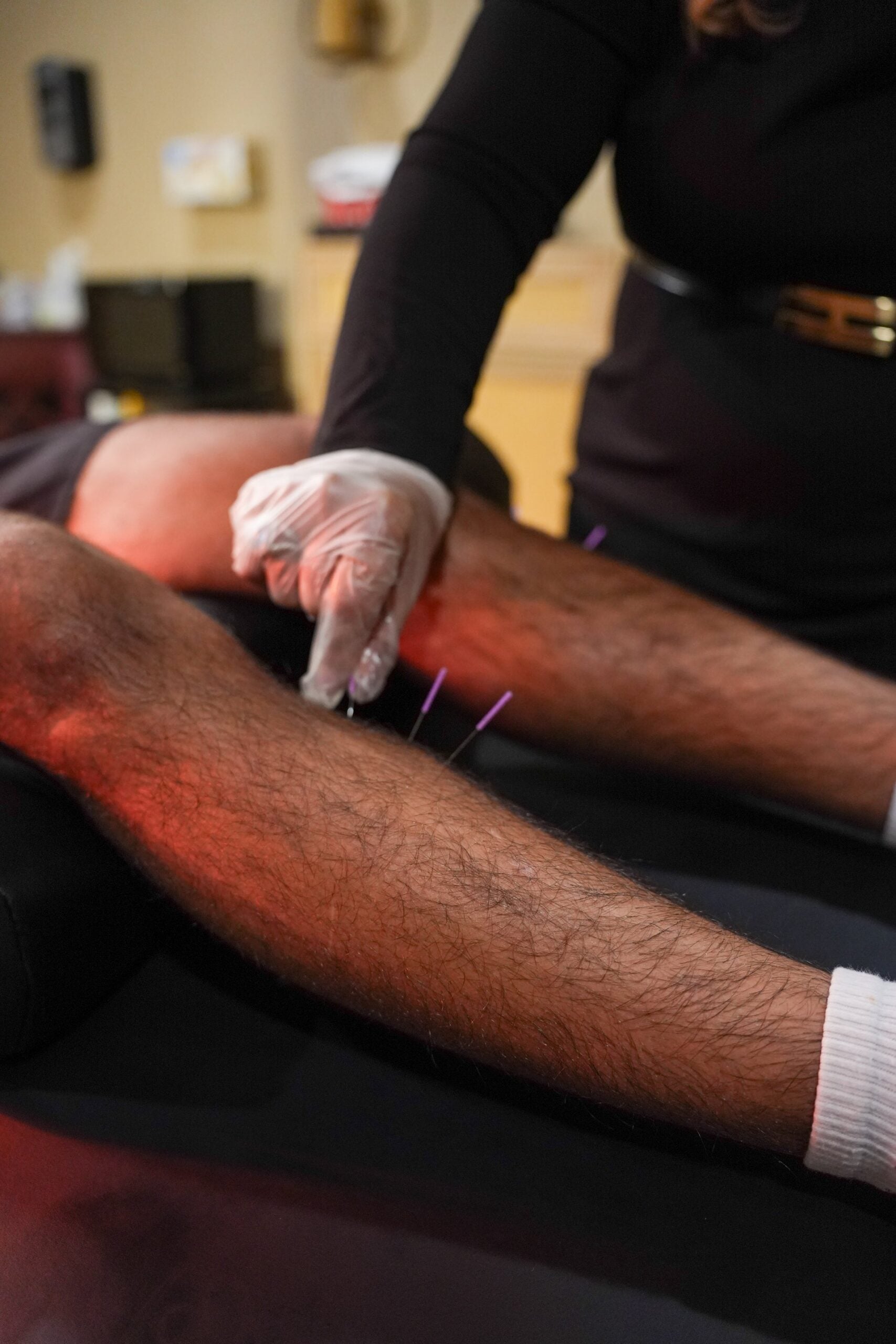
Sciatica is one of the most disruptive pain conditions a person can experience. The sharp, electric-shock pain that shoots from the lower back down through the buttock and leg makes sitting, standing, and walking all difficult — and it doesn’t respond well to the usual prescriptions. Pain medication numbs it. Stretching might help temporarily. Physical therapy may or may not work. So when patients in Kissimmee, Orlando, and the surrounding area finally come to AcuMedGroup, the question they ask first is almost always the same: “Can acupuncture actually help with this?”
The honest answer is yes — but only when the practitioner understands why sciatica happens in the first place, and when the treatment addresses the underlying cause rather than just chasing the symptom. Here’s how acupuncture works for sciatica, what to expect from a treatment course, and why specialized pain expertise matters for this particular condition.
What Sciatica Actually Is
Sciatica isn’t a diagnosis on its own — it’s a symptom. The sciatic nerve is the longest nerve in the body, running from the lower spine through the buttock and down the back of the leg. When something compresses or irritates that nerve, the result is the classic radiating pain pattern that defines sciatica.
The most common causes include:
- Herniated or bulging disc — the cushioning disc between vertebrae presses on the nerve root
- Piriformis syndrome — a deep buttock muscle spasms and compresses the sciatic nerve
- Spinal stenosis — the spinal canal narrows and impinges on nerve roots
- Sacroiliac (SI) joint dysfunction — the joint between the sacrum and pelvis becomes inflamed
- Pregnancy-related compression — postural changes and weight distribution affect the lumbar spine
Each of these creates a different presentation of pain, and each responds to different treatment approaches. This is why a “sciatica protocol” that treats every patient the same way produces uneven results. Effective acupuncture for sciatica requires identifying the specific cause first.
How Acupuncture Treats Sciatic Nerve Pain
Acupuncture works on sciatica through several mechanisms simultaneously, which is part of why it’s effective when single-mechanism treatments fail.
Reducing inflammation around the nerve. Most sciatica involves inflammatory swelling that physically compresses the nerve. Acupuncture stimulates the body’s natural anti-inflammatory response — releasing adenosine and other anti-inflammatory signals at and around the treatment points.
Releasing muscle spasm. Many cases of sciatica involve secondary muscle guarding — the surrounding muscles tighten to protect the inflamed area, which often makes the compression worse. Acupuncture releases that muscle spasm, particularly in the piriformis, gluteus muscles, and deep paraspinal muscles that influence sciatic nerve function.
Stimulating endorphin release. Acupuncture triggers the release of the body’s natural pain-relieving chemicals at both the treatment site and centrally in the nervous system. For chronic pain patients whose nervous systems have become sensitized, this helps reset the pain signal.
Improving local circulation. Increased blood flow to the lumbar and gluteal regions helps clear inflammatory byproducts and bring healing factors to the affected tissue.
What makes acupuncture different from a single-mechanism treatment like a cortisone shot is that it addresses all of these at once — and the effects are cumulative over a treatment course rather than declining with repeated use.
What a Treatment Course Typically Looks Like
For acute sciatica that’s flared up within the past few weeks, most patients see meaningful pain reduction within 3 to 5 sessions. A typical acute treatment course runs 6 to 10 sessions, scheduled twice weekly during the first few weeks and tapering as symptoms improve.
For chronic sciatica that has persisted for months or years, the timeline is longer. Most patients need 8 to 12 sessions to see meaningful change, with another 6 to 8 maintenance sessions to consolidate the result. Patients with severe nerve compression may need ongoing periodic care alongside other interventions.
Throughout the course, treatment evolves based on response. Initial sessions focus on calming inflammation and acute pain. Later sessions shift toward addressing the underlying cause — postural patterns, muscle imbalances, lifestyle factors — that allowed the sciatica to develop in the first place.
What Sets the AcuMedGroup Approach Apart
Sciatica is a pain condition first and foremost, which is why the practitioner’s pain expertise matters more here than for many other complaints. AcuMedGroup is led by Dr. Cecilia Rusnak, who holds a PhD in Oncology Pain Management — formal doctoral training in the most complex pain presentations, including chronic neuropathic conditions like sciatica. Her broader credential stack includes a Doctor of Acupuncture from Pacific College of Health and Science and a Master of Science in Oriental Medicine, alongside clinical training in China.
This combination matters because sciatica patients have often already tried physical therapy, chiropractic care, anti-inflammatories, and sometimes injections without lasting results. The patients who eventually come to AcuMedGroup need a practitioner who can see what’s been missed — and who has the diagnostic and pain-management training to design a treatment plan around their specific presentation.
Our clinic at 1107 Person Street in Kissimmee serves sciatica patients throughout Central Florida. To learn whether acupuncture is right for your situation, call AcuMedGroup at (407) 624-5258.
Frequently Asked Questions About Acupuncture for Sciatica in Kissimmee, FL
How quickly will I feel relief from sciatica with acupuncture?
Most patients with acute sciatica feel some relief within the first 2 to 3 sessions, with meaningful pain reduction by sessions 4 to 6. Chronic sciatica takes longer — typically 6 to 8 sessions before significant change, with full benefit emerging over 10 to 12 sessions. The timeline depends on the underlying cause, severity, and how long the condition has been present. Dr. Cecilia Rusnak provides a personalized timeline at your initial evaluation.
Can acupuncture help if my sciatica is caused by a herniated disc?
Yes. Acupuncture cannot reverse the disc herniation itself, but it can substantially reduce the inflammation, muscle spasm, and pain signals that make the herniation symptomatic. Many patients with herniated discs become essentially pain-free with consistent acupuncture care, even though imaging may still show the underlying disc issue. Acupuncture is often combined with medical massage at AcuMedGroup for these cases.
Is acupuncture safe to combine with other sciatica treatments?
Yes. Acupuncture works alongside physical therapy, chiropractic care, anti-inflammatory medications, and most other approaches. It does not interfere with imaging, surgery decisions, or medication. Many AcuMedGroup patients use acupuncture as part of a combined approach — and it often helps them reduce their reliance on pain medication under their prescribing physician’s supervision.
Will I need acupuncture forever, or just until the sciatica resolves?
For most patients, no — acupuncture for sciatica is a finite treatment course, not an ongoing dependency. After the initial course, most patients move to occasional maintenance visits (monthly or as needed) to address any flare-ups. Patients with structural causes that can’t be fully resolved (severe stenosis, ongoing physical demands) may benefit from continued periodic care, but this is the exception rather than the rule.