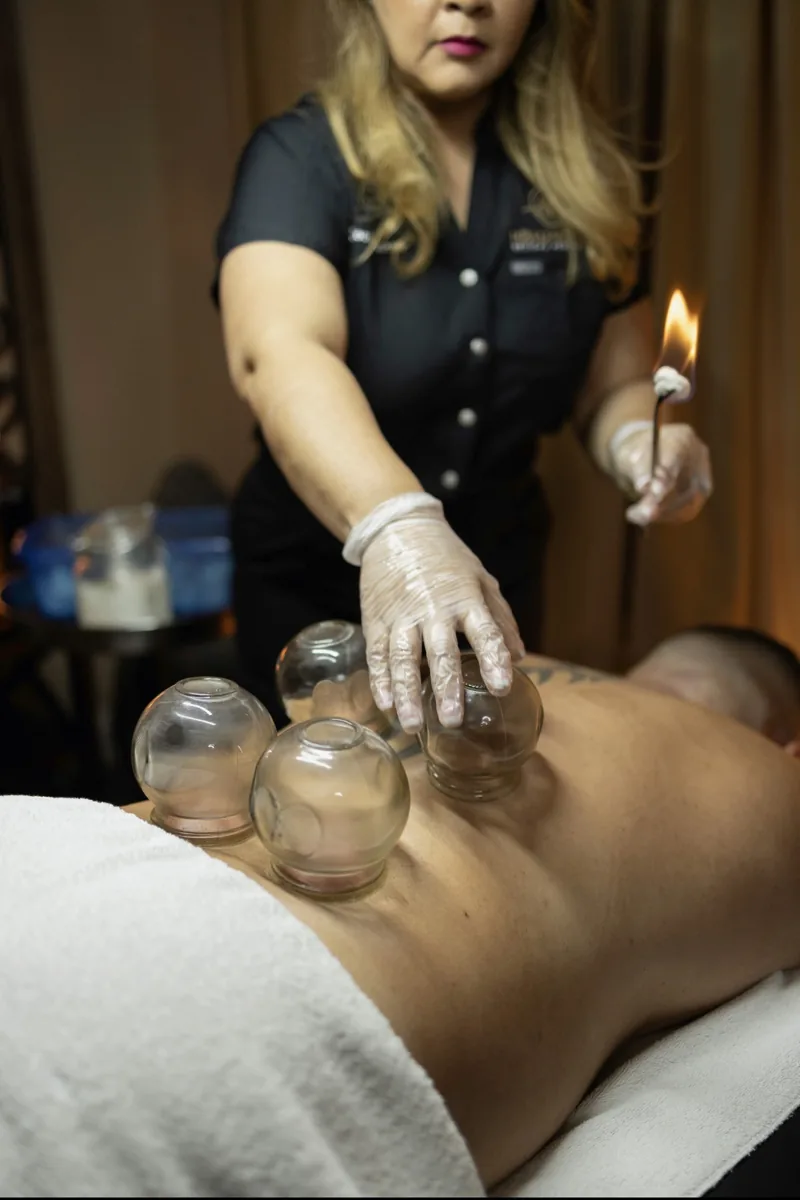
If you have watched one of our reels, you have seen it: a lit cotton swab flashes inside a glass cup, the cup lands on a patient’s back, and the skin lifts gently into the glass. That is fire cupping, and it is the version we use most at AcuMedGroup in Kissimmee. It looks dramatic. The experience on the table is anything but. This post walks through what is actually happening, how it differs from the suction cups you may have seen elsewhere, and how to read the marks it leaves.
What cupping does, whichever way the cup goes on
Every kind of cupping does the same basic thing. Air inside the cup is removed, the cup seals to the skin, and the tissue underneath is drawn upward. Where massage presses down into a muscle, cupping pulls up and away from it. That lift separates layers of fascia that have stuck together, opens space for blood and lymph to move, and gives a tight muscle a signal it rarely gets: let go.
Patients feel a firm pulling sensation under each cup, most describe it as strange for the first minute and then deeply relaxing. Cups usually stay in place for five to ten minutes, or are slid across oiled skin for a gliding effect over a larger area such as the back or thighs.
Fire cupping: how the flame creates the seal
Fire cupping uses heat, not a pump. Dr. Rusnak dips a cotton swab in alcohol, lights it, and passes the flame inside a thick glass cup for about a second. The flame never touches you; its only job is to heat the air inside the cup. The cup is placed on the skin, the warm air cools and contracts, and that contraction creates the vacuum. The seal forms in a moment and the swab is extinguished before the next cup.
- The pull is smooth and even. Cooling air draws steadily rather than in the stepped pulls of a hand pump, which many patients find more comfortable.
- The glass carries gentle warmth. The cup itself is only slightly warm to the touch, and that warmth feels good on a tight upper back.
- It is the traditional method. Fire cupping is how cupping has been done in Chinese medicine for centuries, and it pairs naturally with the acupuncture that usually happens in the same visit.
Suction cupping: the pump and the silicone cup
Suction cupping, often called dry cupping, removes the air with a small hand pump or by squeezing a soft silicone cup before it touches the skin. The pull is adjustable and the cups are easy to move, which makes this style common in sports and physical-therapy settings. We use suction cups when a patient prefers no flame, over bony areas where a glass cup will not seat well, and for gliding work on the legs.
Neither method is better across the board. The choice is about the area being treated, how much pull the tissue can take, and what you are comfortable with. Both are discussed at your consultation and you can ask for either.
About those round marks
The circles left after cupping are not bruises. A bruise is damage from impact. A cupping mark is blood and cellular debris that was already sitting in stagnant tissue, drawn to the surface where the body can clear it. The colour tells us something: light pink means healthy circulation in that spot, deep red or purple means the area was congested and needed the work. The marks fade in three to seven days, they are not painful, and they lighten from visit to visit as the tissue improves.
Who cupping helps
- Tight, painful muscle regions in the back, shoulders and neck
- Stiffness and reduced range of motion
- Tension headaches that start between the shoulder blades
- Recovery after training, physical work or a long drive
- General circulation and relaxation alongside an acupuncture plan
Cupping is not used over broken skin, on patients with certain bleeding disorders or blood thinners, or in some stages of pregnancy. Those questions are covered on the screening call before your first visit.
How cupping fits into a treatment plan at AcuMedGroup
At our clinic in Kissimmee’s Medical Arts District, cupping is rarely a stand-alone service. Dr. Rusnak most often uses it before needles go in, to soften a guarded muscle, or after they come out, to flush the area once the nervous system has settled. Veterans referred through VA Community Care can have cupping included in their authorized acupuncture visits. Read more on our cupping therapy page, or send an appointment request and a member of our clinical team will call you within one business day.
Frequently asked questions about cupping in Kissimmee, FL
Does fire cupping burn?
No. The flame heats the air inside the cup and is gone before the cup touches you. The glass is only slightly warm. Burns are not part of a correctly performed session.
How long do the marks last?
Usually three to seven days. They are not tender and you can shower, swim and exercise as normal. Most patients plan around a beach weekend if they mind the look.
Can I have cupping and acupuncture in the same visit?
Yes, and that is the usual pattern here. Which comes first depends on what the muscle is doing that day.
Is cupping covered by insurance or the VA?
Coverage varies by plan; we verify on the screening call. For veterans, cupping done as part of an authorized acupuncture visit is covered under VA Community Care. See how VA-covered care works.
Request an appointment or call (407) 624-5258. AcuMedGroup Wellness Center, Kissimmee, FL. Hablamos español.