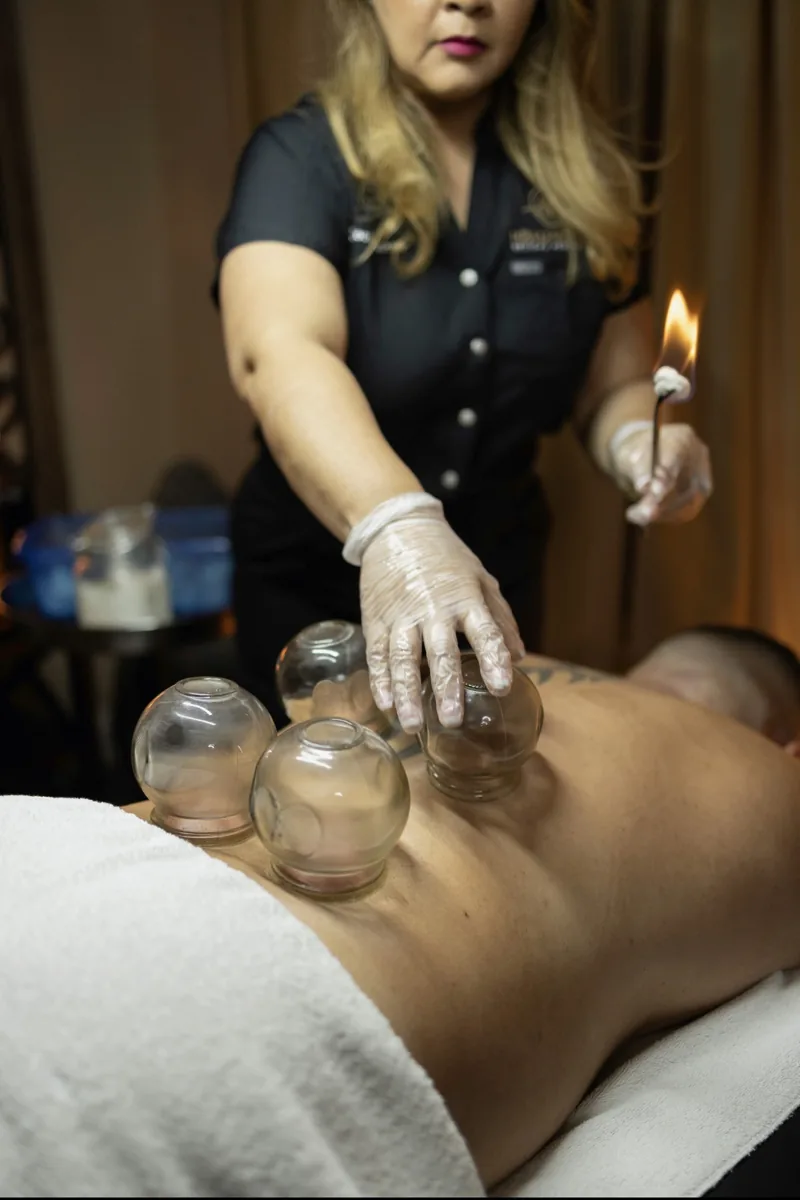
Cupping has roots in acupuncture and traditional medicine. Cups are placed on the skin and the air inside is drawn out, so the tissue underneath is gently lifted. Where massage presses down, cupping pulls up, and that change in pressure floods the area with blood flow, loosens fascia and eases the muscle beneath.
At AcuMedGroup it is most often paired with acupuncture in the same session, either before needles are placed or after they are removed.
What cupping is used for
- Tight, painful muscle regions in the back, shoulders and neck
- Stiffness and reduced mobility
- Tension headaches
- Recovery after training or physical work
- Support for circulation and relaxation
What to expect
Cupping is non‑invasive. You will feel a pulling sensation under each cup, which most patients find comfortable. Cups stay on for a few minutes, or are moved across the skin with oil for a sliding effect. Round marks are normal and fade over several days; they are the visible sign that blood has been drawn into the tissue, not bruising from impact.
Is cupping right for me?
Cupping is not used over broken skin, on patients with certain bleeding disorders, or in some stages of pregnancy. Those questions are covered on the screening call and at your consultation.